
Why Does Top Gun (1986) Feel so Gay Despite Being About a Straight Navy Pilot?
While Tarantino’s famous analysis of “Top Gun” (1986) (TG) is crude and reductive, it points to something real about the movie’s subtext. Why does a movie about a heterosexual fighter pilot feel so homoerotic?
According to Tarantino, the movie is a metaphor where Maverick must pick between heterosexuality (represented by his female love interest) and homosexuality (represented by the other pilots in the academy). But the movie goes to several lengths to show that Maverick is straight, such as adding a heterosexual sex scene later in post-production after test audiences were confused about why there was no “payoff” to the romance between Charlie and Maverick.
While I cannot claim to know more than Mr. Tarantino on the subject of subtext (or homoerotic thoughts, I presume), I think there is an alternative explanation for why the movie feels so homosexually charged in which we do not have to assume that the main character is actually secretly homosexual.
Top Gun is a Coming-of-Age Movie with a Juvenile View of Masculinity
The primary theme of TG is not war. It is actually a coming-of-age story where a bad boy (Maverick) learns to be a good boy by going through trials and tribulations in life (at the Top Gun academy). To do this, he must gain acceptance from his teachers and peers (all men).
The story’s center isn’t about how war affects people or how a soldier must act. It is about being the “best of the best” in a school-like setting. You could easily replace the jets with horses, and it wouldn’t change the movie’s emotional center. The same beats would still work perfectly.
Being a coming-of-age movie, its approach to masculinity is also rather juvenile. The boys are constantly in each other’s faces, pushing each other around to see who’s the strongest. They think their worth as men is defined by how other men see them or how good they are at flying jets. It is as competitive as it is emotionally charged.
Maverick is actually disappointed when he doesn’t get to be a good boy. He gets disappointed emotionally when Iceman is proven right and criticizes his flying skills. His entire existence and worth are built around being a good boy and gaining the respect of everyone around him who matters (again, all men). His love for a girl is secondary right now. We don’t care if he dumps Charlie. We care what Iceman thinks of him much more.
Compare this to a serious war movie like “Saving Private Ryan” (1998). The story isn’t about Tom Hanks’ character wondering what other men think of him or proving he’s the best leader ever. In the opening scene, his primary concern isn’t “gee, I wonder if Iceman will think I’m cool or not as I storm the beach under machine gun fire.”
For the context of the movie, Tom Hanks’ character is a soldier first and then a man. In TG, Maverick is a boy first and then a fighter pilot.
Top Gun Objectifies the Male Body, a Lot, for No Particular Reason
TG’s cinematography seems to aim for “look how cool these men look flying planes,” but it eventually becomes just “look how cool these men look.”
The camera constantly reminds us how attractive the male characters are. This has to be a deliberate strategy because it is too consistent for it to be random. The infamous volleyball scene is probably the most famous example: the film shows the boys all oiled up and enjoying a cool game of volleyball in denim (?) and it serves literally no purpose to the plot. Maverick walks off after that scene to go to the next scene. Even when Goose dies, his body is never damaged. He falls down from the sky in a parachute and is cuddled by Maverick one last time as a helicopter comes down to save them, almost like a classic painting.
Of course, one can also argue that since the movie wants to show the Navy in a good light, they won’t show sailors getting blown apart. But then why the volleyball scene? What does that tell us about the Navy? If we look at it from a juvenile sense of masculinity, it can make a little sense - maybe they just want to show all the boys playing a game and being competitive with each other. But putting baby oil on your actors and making them shoot thirst traps cannot be justified as just a Navy requirement thing.
Consider how Spielberg treats the male body in “Saving Private Ryan”. He has absolutely no interest in showing you how beautiful it is. The opening sequence is as gruesome as it gets when it comes to depicting war’s raw horror. The male body is always vulnerable, always getting blown up in painful ways, burned, blown apart, destroyed beyond recognition. Could one imagine “Danger Zone” playing in the background in that sequence and still feel “hell yeah, being a soldier is so cool”?
But TG is not a war movie, and it does not concern itself with the seriousness of war. Even the “migs” in the movie serve as background confetti, celebrating the friendship and excellent sword-fighting skills the boys show as they finally accept each other.
Mixed Signals and the Sequel
So, the reason why TG feels so homoerotic despite being a movie about a straight dude doing straight things is because of the mixed signals it embodies:
- On the surface, it is about a fighter pilot, but it is actually about gaining acceptance by your bros and other men.
- On the surface, it wants to show how cool fighter pilots are, but actually ends up showing how gorgeous and hot men are.
- Adding the two, it almost feels like Maverick wants to gain their acceptance because they are so gorgeous and hot (from the camera’s point of view).
The homoerotic subtext is inevitable and does not require Maverick to actually be homosexual. Because the dissonance is so obvious, audiences cannot help but look beyond the surface even on a casual watch. “I understand you’re trying to say Maverick wants to be the best pilot, but why are we obsessed visually with how cute Val Kilmer looks in a Navy outfit?”
The sequel changes this by adding female characters who are genuinely relevant, while also shifting the movie’s moral center away from Maverick seeking other men’s approval. It is still a coming-of-age story, focusing on Goose’s son, but it is shot with much less sexually charged (or pervy or Michael Bay-ian) cinematography, which is why it lacks the same latent homoerotic subtext as TG.
In this Slate article, the writer describes how TG felt like softcore homosexual porn when they were growing up. But they end the article with this:
It wasn’t until I left for college, when I belatedly came out and started dating my first boyfriend, that I revisited the film and noticed how there were women in it. Actually, two female actors—Kelly McGillis and Meg Ryan—give memorable performances. I slowly began to realize the difference between the homosociality of military friendships, as portrayed in the film, and the homosexuality I once yearned for. Maverick ends the story in a female lover’s embrace. Who knew? As an adult, I was forced to admit that this female ingénue was not a stand-in for Iceman, not a ruse, not some sort of human fuck-sock existing to constrain an unexpressed male desire that could not yet, to reference Wilde, speak itself. No, that had just been my private journey in a Midwestern basement with a literal sock.
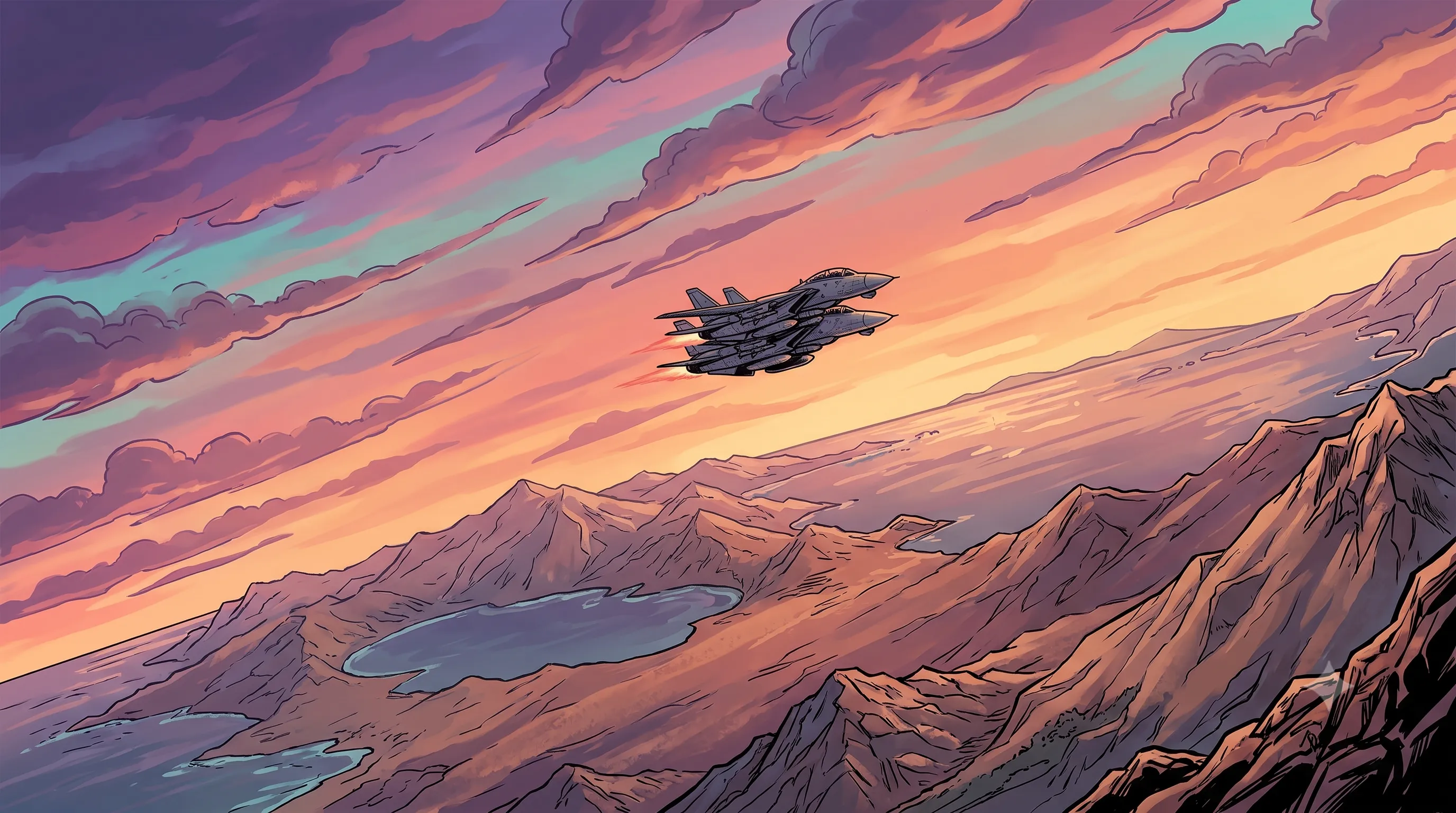
Which is an interesting thought at the end - the movie isn’t really actually about homosexuality, but it really, really feels like it is. Also, while the movie does end with Maverick ending up with Charlie, the final shot is two jets flying very close to each other toward an unknown horizon, and the only thoughts we can be left with are, “God, I’m so happy Iceman and Maverick finally worked out their issues together and are being good boys again.” As the writer mentions, you could have the entire movie play out without a female romantic interest, and it wouldn’t change anything from the plot’s point of view or the film’s emotional center. In the end, Charlie didn’t matter; his acceptance in the group as a good boy did.