
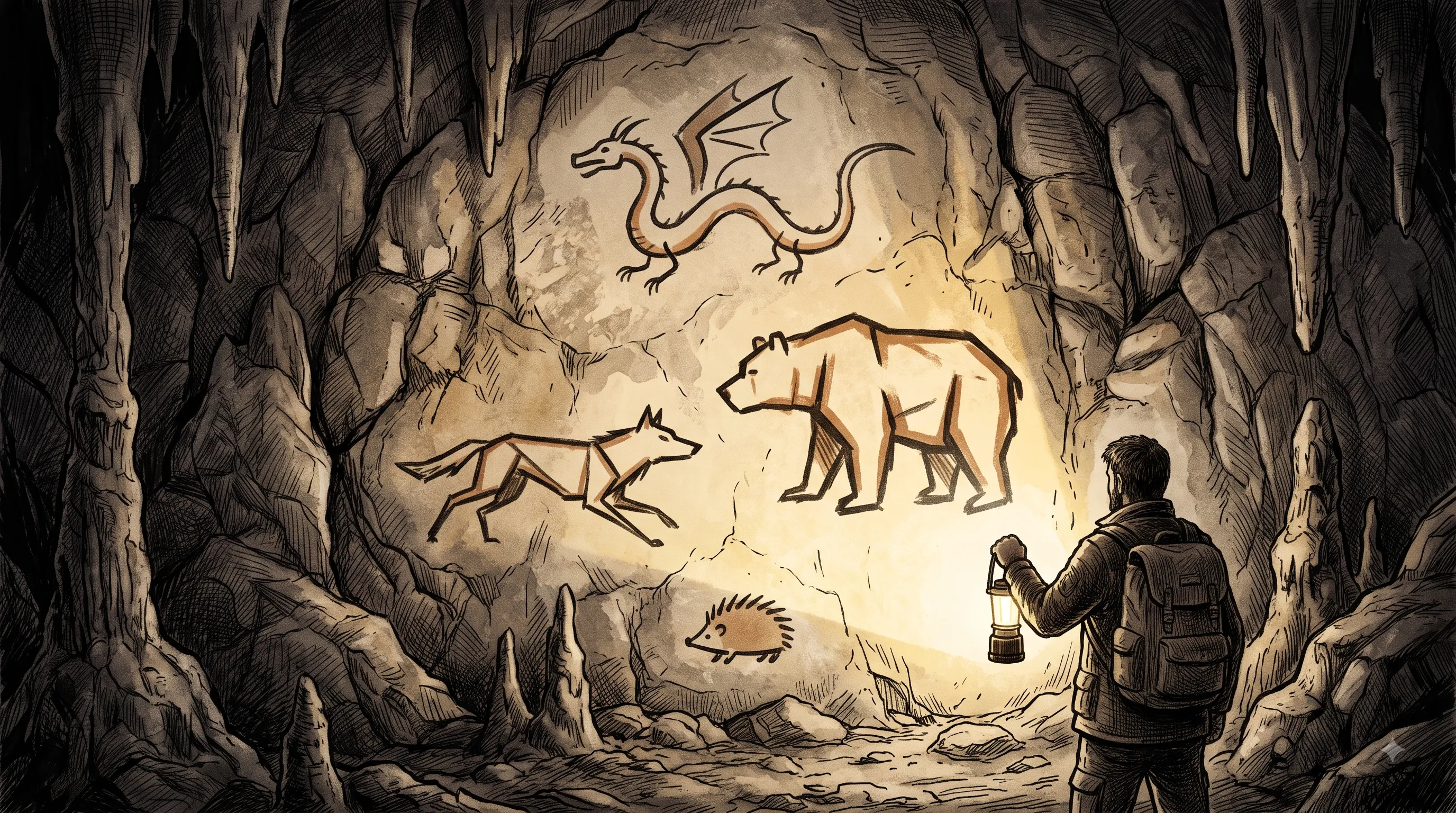
The Real Animals of the World
Once upon a time, there lived a hedgehog in a magical forest. Near him lived a great wolf who had once burned the edges of his burrow. While the wolf went to burn other things, the hedgehog rebuilt his burrow in fear. To make matters worse, his cousin lived right next door in harmony with the wolf. The cousin’s burrow was brighter and more prosperous.
The hedgehog built plenty of fortifications, but he also built cages inside. He knew his power depended on his people not seeing what a functional home can be. His burrow was not to be a home! But to be a garrison under military rule so it could meet the wolf head-on when it inevitably returned.
Any other hedgehog who questioned this endless stockpiling was told to leave, and anyone who wasn’t liked by the major hedgehog was sent to the underground tunnels.
The tunnels were not just for the offending hedgehog, but for their children, and their children, and so on. They were forced to dig in the forever dark. The major hedgehog kept his people starving and convinced them by hook or crook that it was the only way to counter the threat of the great wolf, always looming in the near future.
Across the river lived a dragon. The dragon was ancient, massive, and had accumulated great riches. For years, the dragon would feed the hedgehog scraps of food, not because of love but because having a dangerous, spiky creature to counter the wolf was in the interest of the dragon. The hedgehog knew it was being used as a living deterrent, but it did not care, for it wanted nothing but to face the wolf again, or so it told its people.
This would go on for a while when a crazy bear came crashing through the forest. The bear had started a savage, unprovoked war, bringing death and destruction with it. It thought it would emerge victorious but ended up stepping into a bear trap, perhaps the greatest bear trap the forest has seen. But the bear does not quit. The bear’s appetite for war was matched only by its need for weapons, and it asked the hedgehog for help.
By this time, the dragon was still ancient but hiding its age; deep down, it knew it did not have all the time in the world.
The hedgehog agreed to sell weapons to the bear, not just the spikes but also soldiers. The hedgehog didn’t care if its soldiers did not return; it was preparing them to die in an unwinnable war anyway. The soldiers’ families were held as collateral as they marched off to fight for the bear.
So the young hedgehogs marched into the bear’s meat grinder, dying by the thousands in the mud, fighting an enemy they did not know and for a land they did not care about.
In return, the bear paid the hedgehog well. It gave him food, oil, and gold. The major hedgehog, however, did not use this wealth to free his dominion; why would it? He only needed to keep the guards of the tunnels happy, meanwhile paving his own chambers in blood gold. As long as the major hedgehog was prosperous and strong, the burrow could be shaped to look prosperous and strong too; how could its people say the cousin’s burrow was better?
For the first time, the major hedgehog felt some sort of independence from the dragon. It no longer needed scraps; it no longer needed to be just the dragon’s puppet. The dragon watched this with open eyes. He was happy with the bear’s rampage as it kept the wolf distracted, but he did not feel very happy seeing the hedgehog growing rich and arrogant, especially at this time.
Now, what happens if the bear loses its war? It will crawl back to its cave and be unable to afford to pay the hedgehog anymore and will have no need for its soldiers.
Suddenly, the tables turn for the hedgehog.
When the good times stop rolling for the guards, they will look at their empty bowls in a new light. The major hedgehog’s biggest threat was not the starving prisoners, but the well-armed guards who suddenly felt let down.
Terrified of this, the major hedgehog will lock down tighter than ever. He will run to the edge of the burrow again, yell fanatically at the sleeping wolf, scream a new war is imminent. He must go back to the religion of fear. And it must go back to the dragon, who now gets to alter their deal of scraps from a position of absolute power.
What if the bear wins though?
In case that happens, the forest will burn for days. The bear, victorious but deeply scarred, will remember the hedgehog. Instead of just giving food and gold, it will give the hedgehog bigger and better gifts. The hedgehog, once just a localized nuisance against the wolf, will now become a legit threat to the forest.
Yet inside the burrow, the cages will remain shut. It is likely the hedgehog will spend its wealth on replacing its old rusty iron bars with unbreakable steel. He will feed his guards so well they will worship him out of genuine admiration and loyalty, not just fear. The regime that once defined itself by fear of the wolf will now define itself by the fear of itself.
The hedgehog will become even more provocative. It will march to the edge of the forest, snarl at the wolf, and make threats it only once dreamed of. Knowing that it has the bear and its endless love for war behind it, it will dare the wolf to attack lest the wolf be afraid.
Across the river, the dragon might start feeling uneasy. The bear’s victory and the insult to the wolf are a good thing for the dragon, but an independent, power-hungry hedgehog right near the dragon’s land? The blood pact between the hedgehog and the bear is not good for the dragon.
It is easy to see the dragon, the bear, and the hedgehog united in their hatred for the wolf. But if you look closely, you see they hate the wolf for their own reasons and are unlikely to charge together.
The bear just wants to set the whole forest on fire at this point. It has nothing to lose and wants to drag all parties into a bigger conflict so its own conflict makes sense.
The hedgehog is happy to taunt the wolf, to look scary so that the wolf leaves it alone like all other animals, but the hedgehog knows an all-out confrontation with the wolf will not result in a good outcome. And then, there is the dragon.
The dragon had spent decades building trade routes with all animals, even the animals the wolf claims to protect. The dragon’s plan was to slowly but surely push the wolf out of the forest by forming alliances and claiming all the land and the rivers the wolf claims are under his protection.
The dragon does not see the bear or the hedgehog as its equals but as reckless arsonists, a lesser form of warrior. A war between the wolf, the bear, and the hedgehog will destroy all the trade routes the dragon spent years building.
The wolf and the dragon are both powerful creatures. Neither fears the other, and neither needs to beg the smaller animals to survive. But they see power differently.
The wolf saw power as something to yield; it saw it as an obligation. If you can shape the forest, you must shape it and enjoy the rewards that come with it. The dragon saw it as something to accumulate; why destroy the enemy when you enslave it instead? Why fight a war today if time itself will weaken the enemy tomorrow?
The wolf thinks the dragon’s patience is weakness. The dragon thinks the wolf’s intervention is stupidity. The wolf focuses on winning the crisis in front of it, but the dragon thinks beyond the next crisis. The wolf keeps running from fire to fire but has always managed to be powerful enough to extinguish the raging flames so far.
The dragon watched the wolf spend its treasure, the bear exhaust itself in bloodlust, and the hedgehog become dependent. It saw the trade routes expand, industry grow, and smaller animals become more and more dependent on it for protection, even though it never fought as much as the wolf did.
There is a danger in the dragon’s philosophy. A creature that waits too long can often discover that the world changed faster than it anticipated. It is possible for the dragon to miscalculate, underestimate, or provoke a different coalition of animals it isn’t considering a threat.
And the wolf has something the dragon does not: influence that is bought not only in trade but in battle. These alliances can often be expensive, frustrating, and thankless for the wolf, but they also provide a level of loyalty that cannot simply be purchased.
Neither the wolf nor the dragon nor the bear nor the hedgehog can know the future.
Note: You can find the public version history of my articles on my github: link.
Updates: Changed “fanactically” to “fanatically”. (18th Aug 2026)