
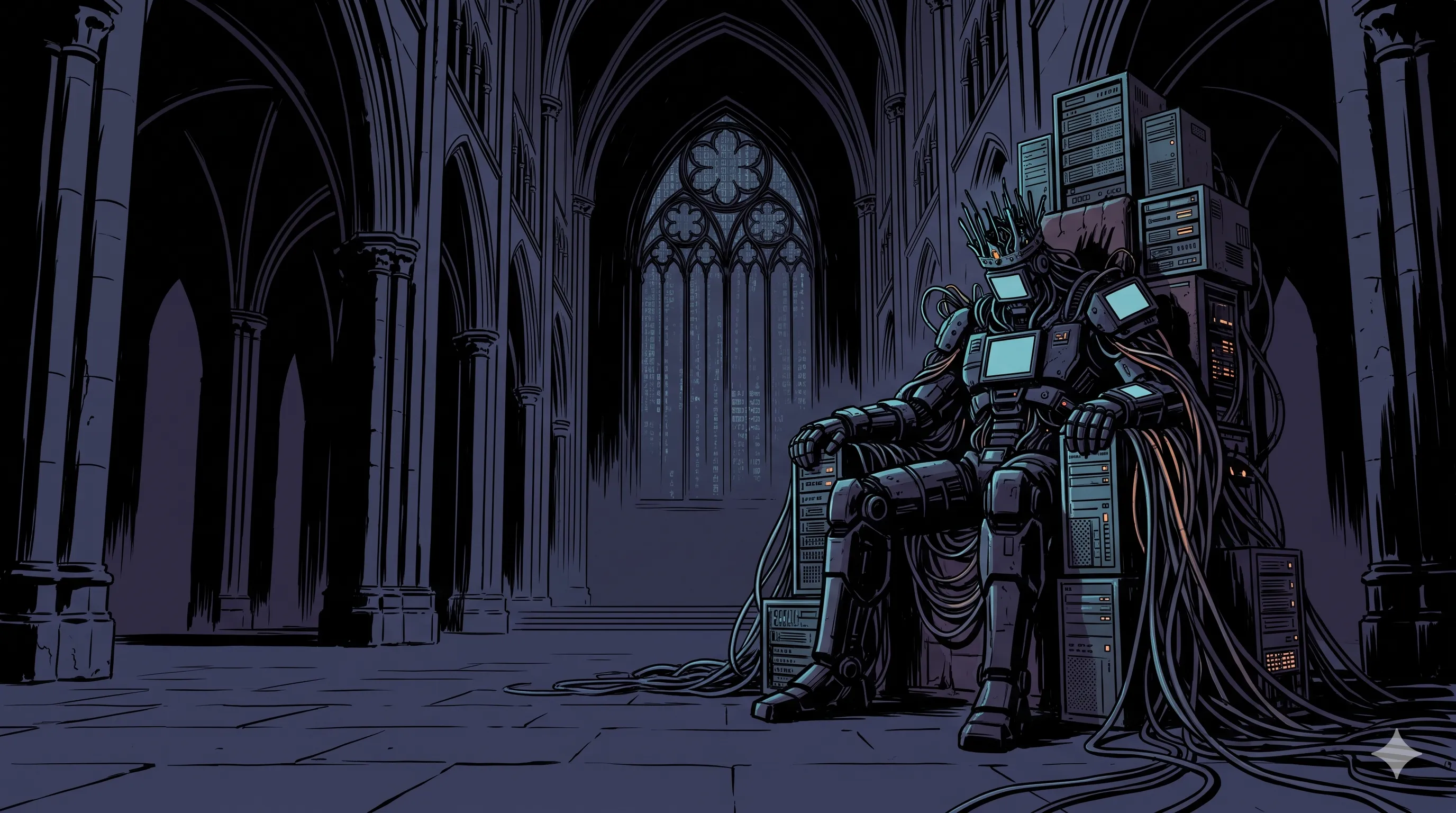
No Kings, Just a Few Techno Lords
Feudalism is an economic system in which rich landlords owned the land and poor peasants (serfs) paid rent, a portion of their harvest, and other fees as determined by the lord. Technofeudalism argues that big tech has replaced the lords of the past and seeks to extract value (ruthlessly) from the users of their platforms, very much like the lords extracted value from the serfs.
Social media platforms, app stores, cloud providers, and digital infrastructure providers are some of the clearest examples. For example: on average, you have to pay 30% to Apple whenever you sell an app on its platform; you have to pay more than half of your net earnings to YouTube as a creator; you have to give up 30% of any revenues made from selling on Steam.
The problem isn’t that platforms charge fees. They have infrastructure to maintain, employees to pay, and services to develop. The problem is what happens when a handful of companies control the infrastructure everyone else must use and can unilaterally change the terms of access. As the internet developed and the world migrated to the cloud, it may even seem natural for such massive organizations to form. But that is precisely the problem we face when we trade cold comfort for change.
The problem with feudal lords wasn’t just economic; it was also social, with a select few having free rein to exercise power directly over the many powerless “users of their platforms”.
No Kings Protest Faces Technical Issues, Meta Blames Claude
On Saturday, the No Kings movement’s Instagram account was temporarily suspended amid ongoing protests and demonstrations that have drawn millions to the streets. While Meta claims it was an automated response to suspicious activity on the account, U.S. Senator Bernie Sanders argued that “this is what billionaire ownership of the media means”.
Meta’s Andy Stone would later clarify on X that the account was suspended because “[Meta’s] network security systems detected the use of a Claude tool reading profiles, posts, and hashtags, the rate of which sharply increased (~4x volume) in intense bursts”.
While it is useless for me to speculate on the reasons behind the suspension, it highlights the public’s dependence on these platforms. It illustrates how a single private company can influence public communication at enormous scale, with relatively little transparency or accountability to the people who depend on it. This isn’t the first time Meta has been accused of doing wonky things.
We live in a world where Meta exercises its power and extracts rent from the same channels that people use to communicate, connect, and organize. When those channels can be revoked for arbitrary or targeted reasons, we’ve effectively made these companies gatekeepers of digital public life, which, in 2026, is increasingly inseparable from public life itself.
AI Technofeudalism and the Future
AI makes the technofeudalism problem even more dangerous.
If people keep relying on AI models served from cloud infrastructure for critical work, platforms will eventually control the means of production. Given the widespread use of AI in every domain (or the attempt to use it), it is not hard to imagine a future where Time magazine would cheesily select Claude as its person of the year, or whatever. It would indicate that just as social media used to be the channel through which we connected, AI platforms are becoming the channel through which we work and generate economic value.
Most people focus on whether AI will replace human workers at scale. But few focus on what happens if that becomes reality: a select handful of companies own that AI, effectively becoming something feudal lords could only dream of in earlier ages.