
Why Gen Z is Nostalgic for a Digital World They Never Knew
In 2000, Microsoft authorized one of the largest payments for a single photograph in history. The payment was so huge that traditional logistics simply refused to handle the transaction.
Because no courier could provide the insurance required to ship the original negatives, the company was forced to fly the photographer to its headquarters to deliver the photographic asset by hand. The photographer was Charles O’Rear, who likely had no idea his photograph would become one of the most viewed images around the globe by shipping as the default wallpaper for the brand new Windows XP.
At that time, Microsoft was obsessed with owning the definitive vision of the new millennium in technology: the impossibly green, hyper-saturated horizon of “Bliss.”
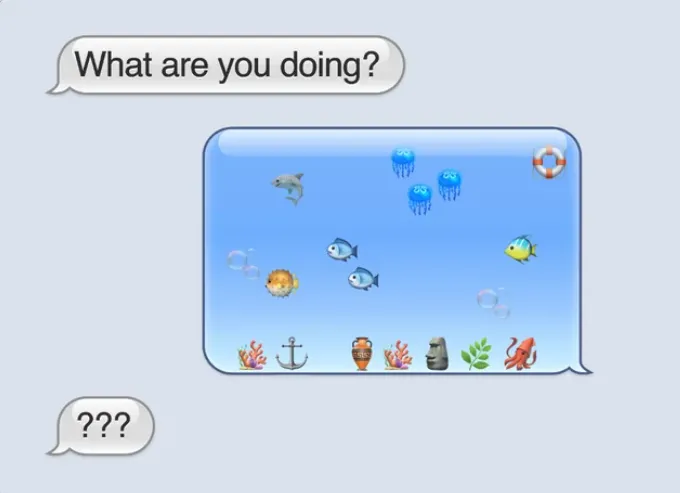
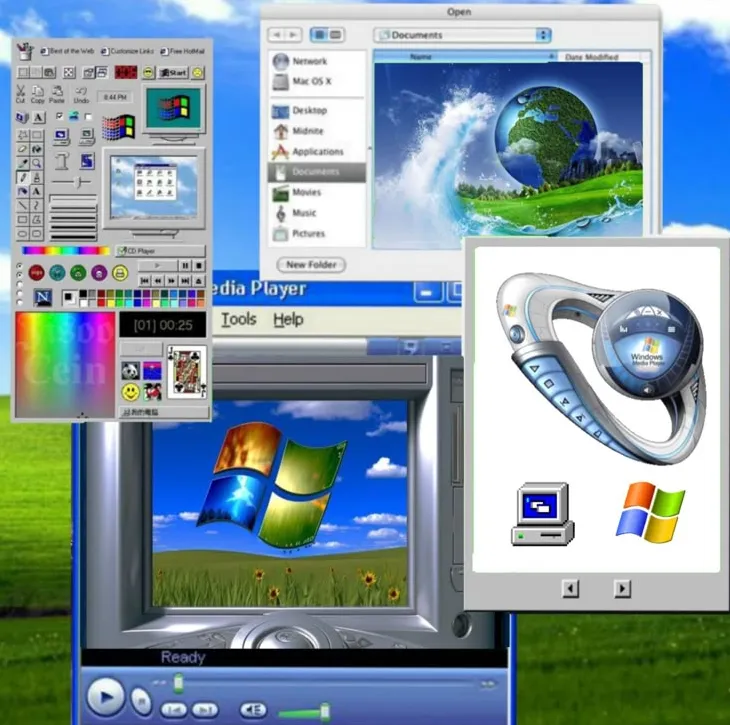
This obsession with the organic was part of a design language now recognized as Frutiger Aero. It was the style that defined the digital world from the arrival of Windows XP through the first smartphones, a warm look based on glossy textures, water droplets, and glass-like transparency. It was a clear rejection of the beige, boxy utility of the eras that came before, with a focus on making computing feel like part of nature and the bright future (which seemed just within our grasp).
By dressing our systems in the textures of nature, designers sought to make the machine feel more human, transforming the cold silicon of the late nineties into an inviting, high-fidelity playground where the only limit was your imagination itself.
The era was simultaneously shaped by a deep, almost naive optimism about what tech could become. Following the Y2K scare, people saw the coming millennium as a frontier where nature and technology could coexist perfectly. This was also a time before we were worn down by social media algorithms, when the idea of a “Global Village” felt like a shimmering goal rather than the surveillance nightmare it has become today.
Frutiger Aero was the visual expression of that faith.
However, technology eventually grew up. It stopped being a wonder and became a utility, and those glossy surfaces began to fade as well.
The explosion of smartphones also demanded a new kind of efficiency. Designers started to care more about battery life, loading speeds, and the small screens in our pockets. These devices would eventually make tech more accessible, but they forced a change in how we thought about UI and design.
The vibrant and textured depths of the 2000s were suddenly dismissed as unnecessary friction. In their place, we ushered in a Great Flattening and traded the soul of the digital garden for a sterile and flat UI over time.
A Brief History of Frutiger Aero
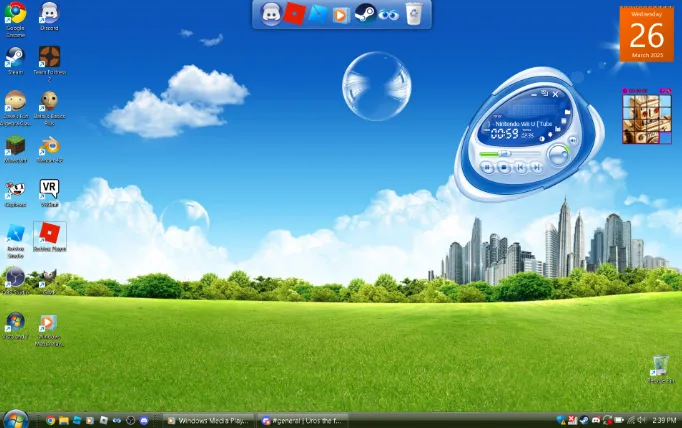
The history of Frutiger Aero is essentially the story of consumer technology trying to humanize itself.
After surviving the 1990s, which were defined by cold silicon and steep learning curves, the industry realized that mass adoption required a softer approach. Designers introduced an interface that relies heavily on environmental cues.
They used bright skies, transparent windows, and tactile buttons to make operating systems feel more like physical spaces. This design language became the default look of the early 2000s. During this period, the tech sector was operating on a wave of deep optimism. Software was designed to be visually loud and immersive, to have character, to make people feel like they were interacting with real-life objects that had just been digitized (almost magically) into this amazing new machine.
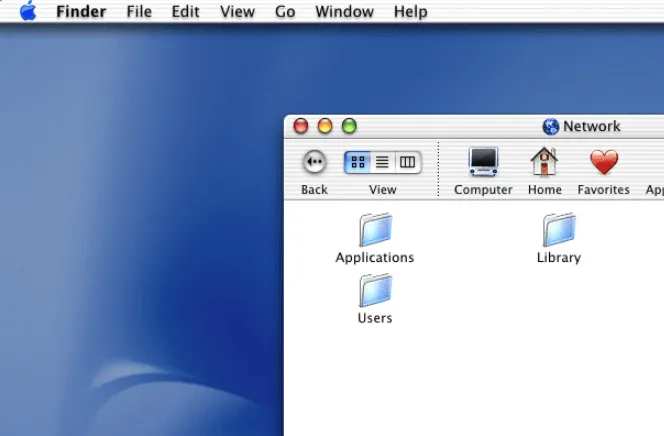
The goal was to convince users that the digital frontier was a welcoming place. When Steve Jobs introduced the Aqua interface, he emphasized that the buttons looked good enough to “eat.” It was an era of sensory tech where operating systems were treated as destinations, as virtual representations of physical places, rather than just an interaction layer.
The mass adoption of mobile devices fundamentally broke this model. The intricate textures and lighting effects of Frutiger Aero were simply too heavy for early smartphone processors. As consumer attention shifted to mobile ecosystems, loading speeds and battery retention became the most important metrics in product development. The glossy surfaces of the 2000s ended up actually hindering the user experience.
In response, the industry ushered in a wave of minimalist design. Flat UI became the new standard, prioritizing clean lines, readable fonts, and fast load times. We gained a more accessible and efficient digital environment, but we lost the distinct personality of our digital spaces in the process. Western UI became obsessed with balance and scalability, effectively stripping the whimsy from our daily tech interactions.
Yet the flat design approach has not been global.
A Note on the Differences Between Western and Eastern Digital Design
While the Western digital landscape has largely moved toward the minimalist “Great Flattening,” rejecting the glossy textures and depth of Frutiger Aero in favor of clean, efficient lines, design in Eastern countries seems to have followed a different trajectory.

This divergence created a visual divide in which Western UIs prioritized white space and single-purpose simplicity, while Eastern interfaces remained vibrant and maximalist, retaining a sense of sensory richness that the West has largely abandoned.
In markets like China and India, the approach to digital design is defined by extreme information density and the rise of “super-apps.” These platforms often feature interfaces that Western observers might describe as chaotic or overdesigned, packed with nested menus, bright colors, and multi-functional layers. Rather than seeing this as friction, Eastern users often view this complexity as a sign of a robust, high-value tool offering a complete ecosystem.
Ultimately, these styles reflect differing market philosophies: a Western obsession with balance, scalability, and reducing cognitive load, versus an Eastern preference for bluster, speed of access to a variety of functions, and immersive digital environments.
While Western design focused on making the tech “invisible” through minimalist accessibility, Eastern design continues to treat the interface as a destination, maintaining a digital garden that feels alive and intentionally dense.
Frutiger Aero and the Wild World of Early Smartphone Design
Frutiger Aero is a design aesthetic that expands beyond just UI. One of my personal favorites when it comes to hardware designed in line with that vision is cellphones. From the mid-2000s to the early 2010s, Frutiger Aero was at its peak, and the cellphone industry was undergoing rapid evolution.
I still remember when phones had character. Today, we have perfected the form factor and achieved incredible efficiencies, but at the cost of design character. But the industry wasn’t always like this.
Take the Sony Ericsson Xperia Play, for example. With its glossy silver trims and a thick, slide-out gaming pad complete with tactile directional buttons, it perfectly captured the spirit of an industry that wasn’t afraid to be wildly playful.
The hardware not only enabled but demanded interaction, blending the physical satisfaction of mechanical inputs with the immersive, entertainment-heavy promise of the early smartphone era. It was a bold declaration that mobile devices could be dedicated, joyous playgrounds rather than just sleek, monolithic utility tools.
Then there was the HTC HD2, a titan of its time that acted as the ultimate canvas for the Frutiger Aero philosophy. The hardware itself, featuring what was then a massive expanse of glass anchored by a distinct row of physical, metallic buttons, was specifically designed to house interfaces heavily inspired by nature, most notably the iconic HTC Sense UI.
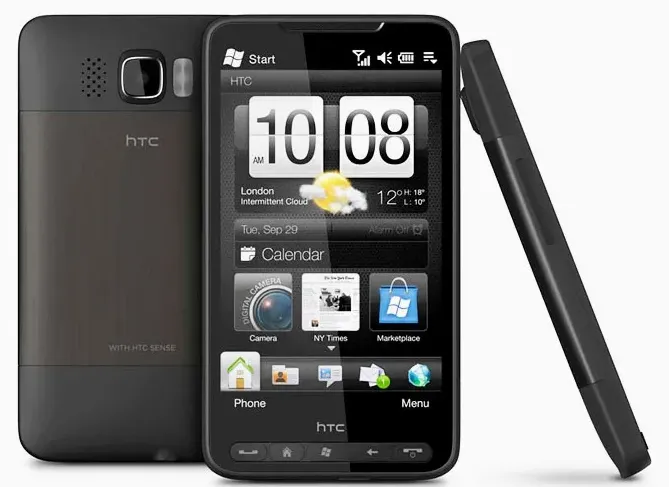
This was an era where digital sunbeams glared across the display and animated windshield wipers cleared virtual rain from the home screen. The phone felt alive, striving to create a seamless bridge between the physical environment and the digital world, even if it meant pushing early mobile processors to their absolute limits.
Finally, devices like the Nokia E7 showcased the era’s obsession with turning tech into a welcoming, futuristic multi-tool. With robust, sliding QWERTY keyboards, chrome accents, and vibrant anodized shells, they felt like gadgets pulled straight out of a hopeful sci-fi utopia rather than sterile corporate assets.
Looking back, it is incredibly easy to miss that unbridled optimism and the sheer, unapologetic character of these designs, even if the glossy aesthetic itself has run its course.
The Great Flattening was ultimately an inevitable trade-off for accessibility and mass adoption; we sacrificed the bluster and heavy moving parts of those early bricks for the efficient, lightweight glass slabs we rely on today, trading a bit of that early digital magic for much-needed practicality.
The Psychological Toll of the “Corporate Memphis” Era
When we traded the glossy, inviting depths of the 2000s for the Great Flattening, we didn’t just lose aesthetic flair; we fundamentally altered our psychological relationship with technology.
The push for minimalist efficiency eventually gave rise to what is now widely known as “Corporate Memphis”, a ubiquitous illustration style defined by flat, faceless, giant-limbed figures awash in pastel colors. It was designed to be universally inoffensive, scalable, and easy to render, but it quickly became the visual shorthand for a sterile, corporatized internet.

By stripping the whimsy and tactile joy out of our tools, we transformed our digital spaces from playgrounds into waiting rooms. Operating systems and apps stopped trying to be beautiful destinations and instead became hyper-optimized workspaces. While this made our devices faster and more accessible, it also made them emotionally hollow.
This relentless focus on frictionless utility has quietly contributed to modern tech fatigue. When every app looks like a spreadsheet masquerading as a social square, it is no wonder that the magic of logging on has been replaced by the exhausting reality of being constantly plugged in.
The Gen Z Nostalgia Wave and the “Webcore” Revival
It is fascinating, then, that the loudest voices calling for a return to Frutiger Aero aren’t necessarily the millennials who lived through it, but Generation Z. Across platforms like TikTok and Reddit, communities dedicated to early-2000s “Webcore” and Frutiger Aero aesthetics have exploded. Young users are meticulously customizing their modern smartphones and desktop environments to simulate the water droplets, auroras, and skeuomorphic dials of an operating system they barely used in its prime.
This movement is less about the literal design of Windows XP and far more about what that design represented. This younger generation is yearning for the optimism of the early internet, a time before digital spaces were enclosed by algorithmic feeds, hyper-monetization, and the anxiety of the modern surveillance web. They are nostalgic for a digital frontier that promised a utopian Global Village, looking backward to find a hopeful version of the future that they feel they were robbed of inheriting.
This cross-generational dynamic closely mirrors the enduring appeal of Star Wars retro-futurism. Just as the franchise’s newest entries often feature young actors who weren’t even alive when the original trilogy hit theaters, today’s creators and audiences are still meticulously trying to capture that universe’s iconic, tactile aesthetic.
We aren’t just rehashing the past out of a lack of new ideas; we are actively rebuilding those clunky, analog-tinged control panels and lived-in starships in glorious high resolution today simply because the original design was fundamentally, undeniably good.
In much the same way, the ongoing revival of Frutiger Aero proves that when a visual language perfectly captures a sense of magic and boundless possibility, it stands the test of time, outliving the obsolete hardware it was built for, inspiring a completely new generation.
The Pendulum Swings Back: Glassmorphism and Spatial Computing
Design is a pendulum, and we are finally watching it swing back from the extreme austerity of pure flat design. The tech industry has realized that while extreme minimalism scales well, it completely lacks a soul.
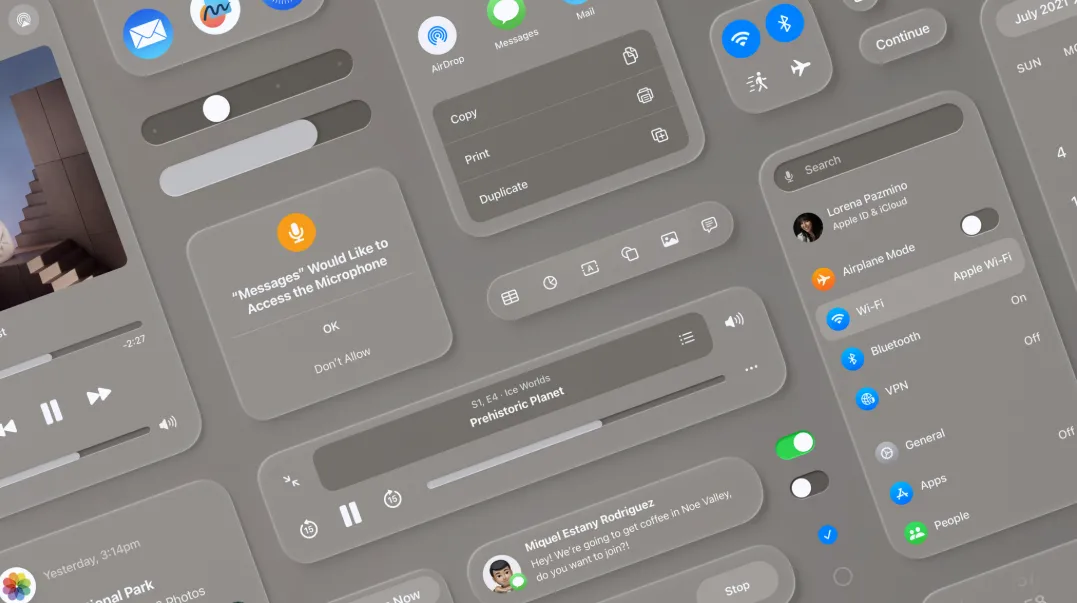
Today, we are seeing the rise of “Glassmorphism,” an aesthetic that reintroduces depth, shadows, and frosted-glass translucency into our interfaces. You can see it in the frosted panels of Windows 11’s Fluent Design, the layered transparency of modern macOS, and most notably, in the rise of spatial computing.
As headsets and augmented reality devices like Apple’s VisionOS attempt to merge digital interfaces with physical rooms, flat design simply falls apart. Navigating a 3D space requires tactile cues, shadows to indicate depth, and interactive elements that feel physically present.
We are inadvertently circling back to the core philosophy of Frutiger Aero: using environmental cues and physical realism to make computing feel natural. It is a synthesis of the two eras, attempting to marry the lightweight efficiency of flat design with the physical intuition of the glossy 2000s.
Ultimately, the history of digital design is a story of necessary tradeoffs. The heavy, moving parts and bluster of the early 2000s had to be sacrificed for mass adoption. We needed the Great Flattening to make our technology universally accessible, fast, and battery-efficient enough to fit into the pockets of billions of people.
As the Eastern approach to UI proves, there is more than one way to design a digital space, but the Western obsession with balance over bluster achieved its goal of turning the smartphone into the ultimate invisible tool.
Looking back, I find I miss the boundless optimism of the Frutiger Aero era far more than the glossy buttons themselves. As our interfaces continue to evolve into spatial realms and augmented realities, the goal shouldn’t be to blindly recreate the past, but to remember its most important lesson.
Our technology should do more than just process our data efficiently; it should occasionally invite us in, remind us of our humanity, and dare to be a little magical.